
Intro
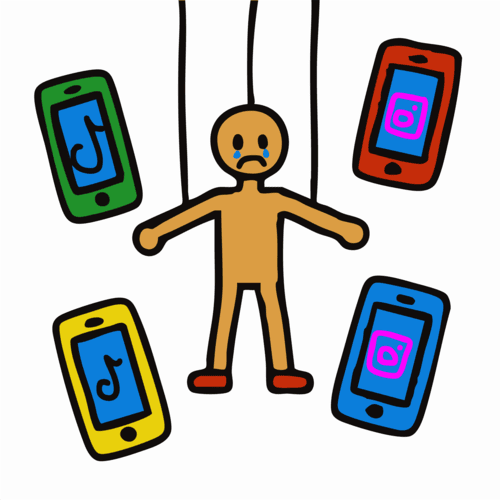
There’s something deeply unsettling happening on TikTok, I’m sure you may have seen a video or two close to the topic. Exploitation dressed up as entertainment. Time and time again, creators with clear intellectual or developmental disabilities are propelled into viral “fame”, not because their audience wants to support them, but because they want to watch them. We’ve seen this before: the rise and unraveling of Daniel Larson, the chaotic alcoholic spiral of Joshua Block (better known as World of T-Shirts), and countless others who are being cheered on and taken advantage of, not helped. TikTok claims to be a platform for “expression and connection,” but for many vulnerable creators, it’s more like a digital colosseum, something straight out of an episode of Black Mirror, if it was more f***ed up, where fans encourage their erratic behavior, not with malice necessarily, but with a toxic mix of curiosity and detachment from the issues at hand.
It’s easy to pretend this is harmless that this is just another weird corner of the internet. But when an audience starts playing with someone’s life for the sake of spectacle, like they’re in a real life game of The Sims and trying to ruin their Sim, we have to ask: why are we, as the viewers, complicit in pushing people toward breakdowns, towards alcoholism, towards jail, just to keep the content flowing? Just for a laugh? And why does the TikTok algorithm propel these people to the top, when it’s not laughing with them, it’s laughing at them. This topic feels especially personal to me because I have a cousin with autism, and I often think about how easily someone vulnerable could be pulled into a similar cycle, could be lulled into a different life just because of a 15 second video they posted. I’d like to say that he has a better support system (family) so maybe this specific kind of exposure wouldn’t happen, but the thought still lingers, and it makes the line between concern and exploitation feel even more urgent. Now let’s start with a bit of the background of the iceberg that encompasses this topic.
Daniel Larson
Daniel Larson’s presence online is often treated as a meme or internet oddity, but the reality behind his story is much darker and quite sad. According to his own accounts, Daniel does not consider himself developmentally disabled from birth. Instead, he points to his abuse and childhood trauma as the origin of his behavioral struggles. In 2012, he was placed at the Tennyson Center for Children, a facility that claims to help children facing severe neglect and abuse, and later taken in by his grandmother. The Tennyson Center for Children is riddled by claims of abuse internally, terrible accounts of personal experiences and overall that it does more harm to the children than help them. This part of Daniel’s life offers important context to those not familiar with the Larsonian Saga, suggesting that everything that followed was shaped by early and unresolved trauma.
Now to the internet and that relation with Daniel, his original content was nothing of the ordinary and somewhat harmlessly in nature. He did what any kid with access to social media does, like many my age did in the Vine era, he posted videos where he sang awkwardly, shared disjointed thoughts, and made bold claims about his future music career. But as his following grew, his content became more disturbing. One of the most troubling patterns has been his obsession with singer Grace VanderWaal. He has repeatedly claimed to be in a relationship with her, declared love for her on camera, and made threatening or possessive comments when others mentioned her. This was not a one-time thing. It was years of obsessive posting that crossed a clear line from fan behavior to targeted harassment despite numerous threats to stop by the VanderWaal family. Through this all nobody sought to get Daniel help, instead the people watched, laughed, and clipped it for reaction content.
Racism has also been a repeated issue in the Larson-verse. Daniel has posted videos where he spits out the N-word without hesitation, like sure you can point to his mental state and that he doesn’t know any better. Sometimes it seemed like he did not understand what he was saying, but other times, hearing him blurt it out, it felt intentional. What complicates things further is that Daniel has shown some self-awareness. He has acknowledged that his actions are wrong, but rarely does he take steps to correct them. Instead of stopping, he continues, often ramping up the intensity instead. That pattern has played out with multiple behaviors, not just pertinent to his usage of racial slurs. He has threatened businesses, creators, and even entire communities on camera.
If you thought that was bad, uh oh here we go. There are also accusations of inappropriate interactions with minors. These allegations have circulated online for a number of years, almost since he started blowing up in infamy, and while not every claim is verified, the number of reports, self admitted videos and screenshots are alarming. Daniel’s behavior has shown a consistent disregard for boundaries and safety. Many of the people around him have either tried to step away or were unable to intervene effectively. What makes it more heartbreaking is that there have been some viewers, fans, genuine people who have tried to help, but the environment around him makes it nearly impossible. And unfortunately many of those that meet him see him more as a source of content than a person in crisis.
In April 2024, Daniel was arrested and charged with seven federal offenses. Six of those charges were for threats involving explosives. The seventh was for interstate communication of a threat directed at the White House. The arrest came after a video he posted, one of many that featured violent or threatening language. His accounts went dark after that, and it appears that he is now dealing with the legal system instead of TikTok’s audience.
Daniel Larson’s story may be over for the time being but i want it to be known that it is not just a quirky footnote in internet culture. It is the story of a person who needed serious psychological help and instead became a character in other people’s entertainment. The trauma he experienced does not absolve him of his actions, especially when those actions caused harm to others. But the environment that allowed him to keep spiraling is just as guilty. What happened to Daniel was not just the result of mental illness. It was also the result of millions of people watching him unravel, egging him on, and doing nothing to stop it.
Joshua Block
Josh Block, known online as “World of T-Shirts,” is a name familiar to many TikTok users and New Yorkers alike. His rise to internet fame began innocently. A young autistic man from my hood, Long Island, New York, Josh gained attention by posting quirky videos around Manhattan, dancing in public, reviewing water bottles, and singing out loud “IN NEW YORK!!!! CONCRETE JUNGLES WHERE DREAMS ARE MADE OF!!” with a mix of excitement and nervous energy. What made his early content stand out was its unpredictability and his unfiltered personality.
Josh’s background adds a deeper layer to his online persona. I remember watching a video of him in High School before the fame, talking about his autism and him running track and field. He seemed like a normal kid, had a good support system in place and yes, autistic, but he’s being taken care of and will have a good life, fun kid. After losing his mother in 2015, he was raised by his grandfather, who remains his main guardian, although nowadays it’s a bit of a tricky situation. From a young age, Josh showed a love for performance and creativity. He even started a t-shirt business in high school, hence the username “WorldofTShirts” showing ambition and a desire to build something of his own. But as his following grew, so did the pressure and consequences of being in the public eye, consequences of claiming to be “The King of New York.”
Once Josh turned 21, things took a dark turn. He began drinking heavily, often live streaming while visibly intoxicated. What started as quirky content evolved into a disturbing chronicle of addiction. In one particularly disturbing moment, Josh was filmed stomping on a fish in public while intoxicated, a clip that quickly spread across social media and highlighted just how far things had spiraled. Fans noticed a change in his behavior. His live streams featured slurred speech, erratic actions, and emotional breakdowns. Josh traveled alone, staying in hotels across the country and overseas, frequently appearing confused or distressed and calling for help when he was not in any danger. His trip to Japan became infamous when he was filmed hitting his head against a wall and yelling incoherently. As well, he was deported from Dubai immediately upon landing allegedly due to him having a criminal record stemming from an intoxicated incident earlier in the year.
Throughout this time, his fans and online viewers continued to watch and record his struggles, turning them into a spectacle. Instead of support, Josh faced exploitation. One of the most infamous examples of this exploitation veiled as support came in 2023 when Josh started collaborating with Mr. Based, a controversial internet figure known for confrontational and often exploitative content. A real piece of shit, honestly I wish nothing but the worst to this man. Mr. Based appeared in several videos with Josh, positioning himself as a friend or mentor. In reality, he encouraged Josh’s unstable behavior, egged him on, encouraged the destructive life choices and pushed him into outrageous and sometimes dangerous situations for views.
A little about the human piece of trash Mr. Based, he is infamous not only for his provocative online persona but also because of serious allegations surrounding him. I also saw a “deep dive” a few months ago and there are several legitimate claims that he was involved in the death of a woman, they say he allowed her to overdose in his NYC apartment and then kicking her out and doing nothing to help. Whether these allegations are true or not, they contribute to a disturbing image of a man who thrives on chaos and controversy without regard for consequences. His association with Josh only deepened the harm by turning a vulnerable young man into a pawn for internet drama.
The dynamic between Josh and Mr. Based was never healthy. What seemed like friendship was manipulation. Josh was used to generate viral content at the cost of his dignity and mental health. The audience cheered on the chaos, failing to recognize the real damage happening behind the scenes. Fortunately earlier this year in 2025 Josh and Mr. Based “broke up,” a real messy break up at that. And hopefully this brings good news to Josh and maybe a better chance that he surrounds himself with a better circle.
Josh remains active online and continues to struggle. He still over drinks during streams, wanders cities alone, and posts raw, unfiltered videos that just remind me of my freshman year college days. What once might have been dismissed as a weird internet personality is now clearly a cry for help. Watching Josh’s descent unfold on camera is heartbreaking, especially for those who know him or come from the same community.
Josh Block is not just an eccentric TikTok creator. He is a person with real struggles facing addiction and mental health challenges. The internet’s role in enabling and exploiting him is a painful reminder of how vulnerable creators are left to fend for themselves while millions watch.
Conclusion
As viewers and could I say digital citizens? But we have a responsibility, before liking, sharing, or commenting on content featuring vulnerable creators, we should ask ourselves if we are helping or hurting. Are we encouraging someone to get better, or are we fueling their breakdown? I’ll admit, I’ve liked and even reposted videos of people who clearly aren’t fully aware of how they’re being perceived, but seeing the comments that push them toward worse behavior or those that treat it like a game is something I can’t justify or ignore anymore.
Platforms also need to step up. They must create safeguards that protect creators with disabilities or mental health challenges, including better moderation, support services, and clearer boundaries around harmful content.
If you want to support creators like Daniel or Josh in a positive way, look for organizations that provide mental health resources or advocacy for people with disabilities. Amplify messages of care and respect instead of chaos and spectacle.
Ultimately, changing this toxic cycle starts with all of us, the viewers, the platforms themselves, and communities alike.
Leave a Reply